

Insights / Marketing Strategy
How Much Should I Spend on Marketing?
There is no single marketing budget that's right for every business. A company trying to grow aggressively, enter a new market or launch a new product will have very different requirements from an established business focused on maintaining its position.
A better question is: What are we trying to accomplish—and what level of investment will realistically give us a chance to accomplish it?
What Determines a Marketing Budget?
Start with these five factors:
1
Your Growth Objective
Are you trying to maintain your current business or significantly grow it? More ambitious objectives generally require greater investment.
2
Your Market
How competitive is your category? Reaching customers in a crowded market usually requires more effort than operating in a specialized niche with limited competition.
3
Customer Value
What is a new customer worth to your business? A company where a customer relationship is worth $50 has very different acquisition economics from one where a new client may be worth $50,000.
4
Your Sales Cycle
Can someone see an ad and purchase immediately? Or does the decision take six months? Longer, more complex buying journeys may require multiple marketing touchpoints before a customer takes action.
5
Your Existing Position
An established brand with strong awareness, organic search visibility and an active customer base isn't starting from the same place as a new business entering the market.
Should Marketing Be a Percentage of Revenue?
Revenue percentages can be useful for benchmarking, but they shouldn't determine your budget by themselves. Two businesses with identical revenue might have completely different:
Margins
Growth objectives
Competition
Customer values
Sales cycles
Market opportunities
Treat percentage-of-revenue benchmarks as context—not a formula.
Work Backwards From the Objective.
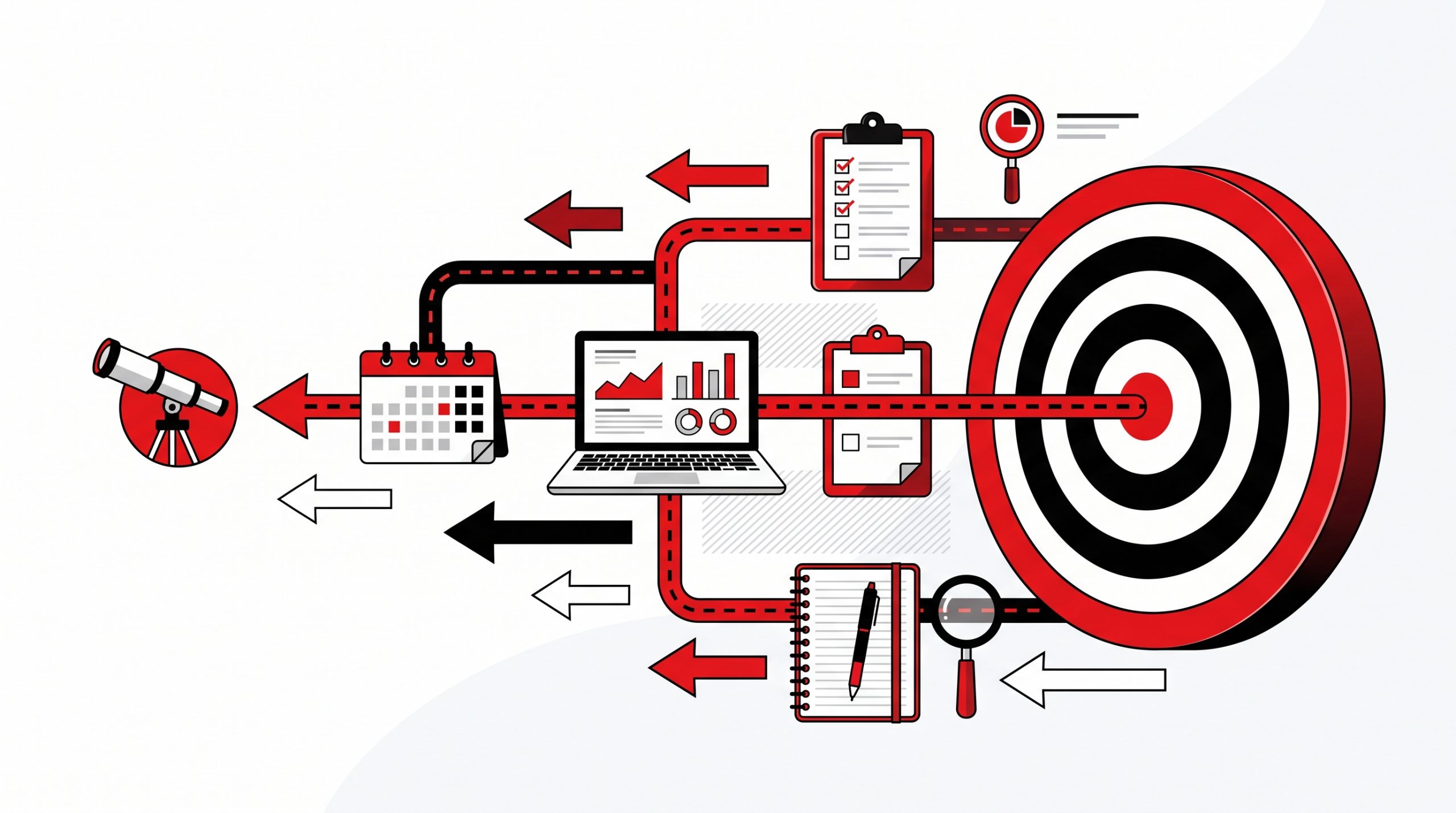
Suppose the objective is to generate more qualified leads. Ask:
How many additional customers do we want?
How many qualified leads might that require?
What is a reasonable acquisition cost?
How much market demand exists?
What investment is required to reach enough of that market?
Now the budget is connected to a business objective instead of an arbitrary number. That's a much more useful conversation.
Don't Spend Everything on Media.
Your marketing budget may need to support more than advertising. Consider:
Strategy
Creative
Photography & Video
Website & Landing Pages
SEO & Content
Advertising Media
Technology & Tracking
Testing & Optimization
Spending $5,000 driving people to a weak landing page may be less effective than allocating part of that investment to improving the experience first. The budget should support the entire customer journey—not just the click.
Start With What You Can Measure.

You don't need a perfect budget on day one. It starts here:
01
Establish the objective.
02
Create a reasonable investment level.
03
Measure what happens.
Then ask:
What's working?
What isn't?
Where are we seeing opportunity?
Where should the next dollar go?
Good marketing budgets aren't simply spent. They're managed.
What Comes Next?
Once you know approximately how much you're prepared to invest, the next question becomes:
Where should you spend it?
Search
Social
Content
Video
Traditional advertising
SEO
The answer depends on your audience, objective and where customers are in their decision journey.
Have a marketing question?
The right budget starts with the objective, not the other way around.
PLAY helps businesses turn objectives into realistic, measurable marketing budgets.