

How Do I Improve Digital Marketing Performance?
When digital marketing isn’t producing the results you expected, the answer isn’t automatically:
Spend more.
More budget can amplify what’s already working. It can also amplify what’s not. Improving digital marketing performance starts by identifying where the opportunity or problem is—then making changes for a reason.
Measure. Learn. Improve. Repeat.
Start With the Objective.
Go back to what the marketing was supposed to accomplish. Was the objective:
Then compare the objective with what actually occurred. The gap between the two gives you somewhere to start.
Find the Weakest Part of the Journey.
Digital marketing performance usually results from several connected elements. Think of the journey as:
AUDIENCE
MESSAGE
CHANNEL
TRAFFIC
EXPERIENCE
ACTION
RESULT
If performance is weak, determine where the chain is breaking. Don’t assume the problem is the channel.
Are You Reaching the Right People?
A campaign can generate excellent click-through rates and still fail if the wrong audience is clicking. Review:
More reach isn’t automatically better. Sometimes performance improves when the audience gets smaller and more relevant.
Is the Message Strong Enough?
If people see the marketing but don’t respond, look at the message. Ask:
A targeting problem can’t always be fixed with better creative. And a messaging problem can’t always be fixed with better targeting. Diagnose before you change.
Refresh the Creative.
People stop noticing things they’ve seen too many times. Digital advertising can make creative fatigue happen quickly. Test:
But don’t change creative simply for the sake of changing it. Use performance data to determine what deserves testing.
Improve What Happens After the Click.
If people click but don’t convert, the campaign may be doing its job. The problem may be what happens next. Review:
Getting someone to the website is only part of the job.
Look at the Channel Mix.
Sometimes an individual channel isn’t the problem. The mix is. You may be investing heavily in seizing existing demand without doing enough to create awareness. Or generating awareness without giving people an effective way to search, research and convert later.
Look at how the channels support one another:
AWARENESS
DISCOVERY
CONSIDERATION
ACTION
RETENTION
The greatest improvement may come from connecting the trip rather than optimizing one isolated campaign.
Test One Meaningful Thing at a Time.
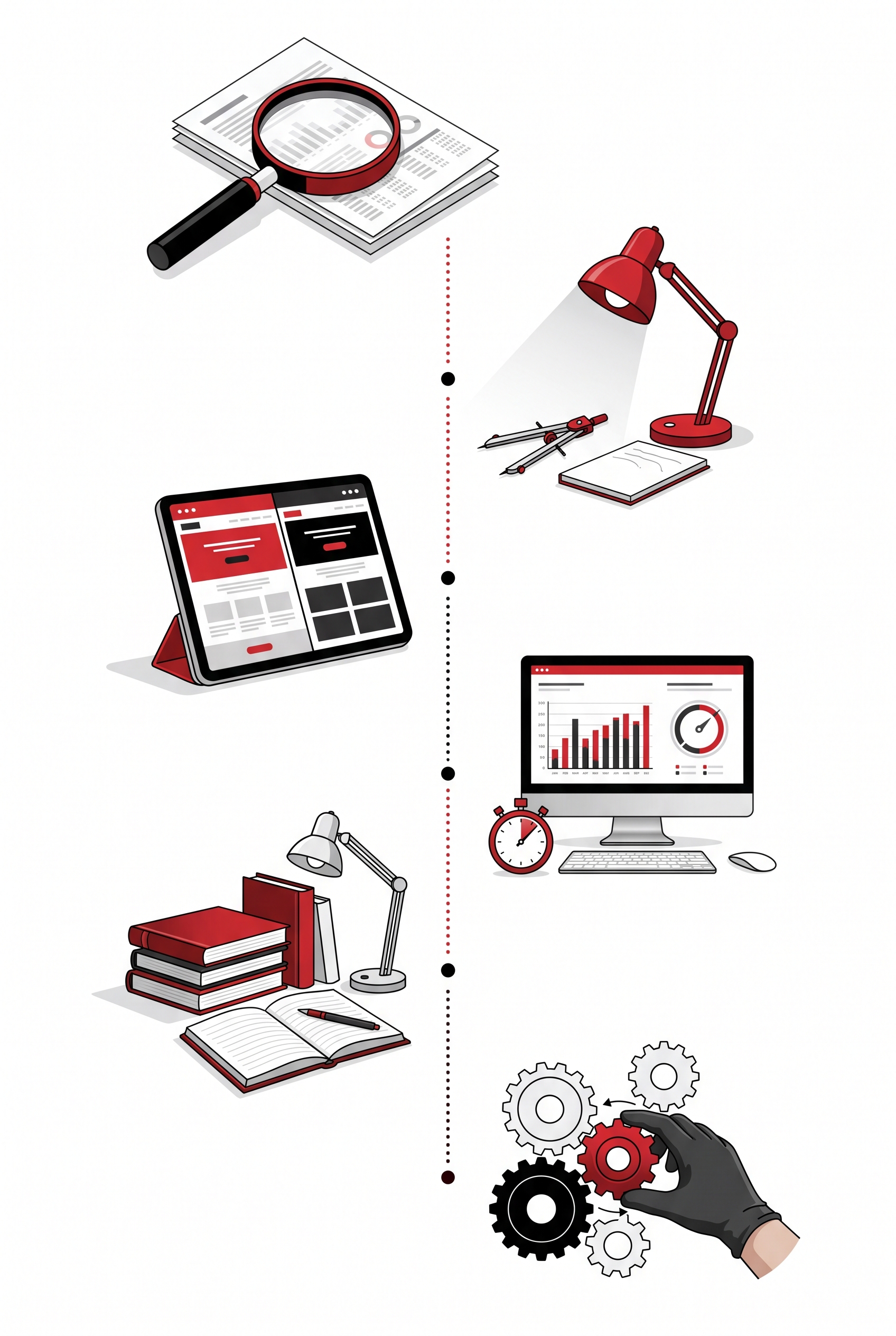
Changing everything at once creates a new problem: You don’t know what worked.
Instead:
IDENTIFY
What appears to be restricting performance?
HYPOTHESIZE
What change should improve it?
TEST
Make an important change.
MEASURE
Did performance improve?
LEARN
What does the result tell you?
APPLY
Use what you learned.
This turns optimization into a process, not guesswork.
Know When to Stop Optimizing.
Not every campaign deserves endless improvement. Sometimes the audience is too small. The offer isn’t competitive. The economics don’t work. The market has changed. Or another channel presents a stronger opportunity. Optimization isn’t about forcing every tactic to work.
It’s about putting resources where they can work hardest.
Digital Marketing Is a Cycle.
There’s no final version of a digital marketing strategy. Customers change. Competitors change. Platforms change. Search behaviour changes. Technology changes. Your business changes. The process continues:
STRATEGY
EXECUTE
MEASURE
LEARN
IMPROVE
REPEAT
That’s how digital marketing gets better over time.
Where Do I Go From Here?
You’ve reached the end of the Digital Marketing Question Chain. You can explore individual digital marketing topics in greater depth—or return to the beginning and reassess how the pieces work together.
Make Your Digital Marketing Work Harder.
PLAY helps businesses identify what’s working, what isn’t and where the strongest opportunities for improvement may be. Then, we bring strategy, creativity, design, content, advertising, search and web together to act on what we learn.